
Photographing a 1968 Eleanor Mustang with automotive light painting
There are some cars that immediately grab your attention. The 1968 Ford Mustang Fastback is one of them. Add the iconic Eleanor-inspired styling, and you have a car that was made to be photographed.
As an automotive photographer, I recently had the opportunity to photograph this beautiful 1968 Eleanor Mustang using one of my favorite techniques: automotive light painting.
Rather than relying on traditional studio lighting, I wanted to create dramatic images that emphasized the Mustang’s body lines, aggressive stance, and unmistakable character.
Automotive Light Painting Photography
Light painting is a technique I use to create highly controlled car photography.
The process begins in near darkness. The camera remains locked in position while I use a controlled light source to illuminate different sections of the vehicle.
Instead of lighting the entire car at once, I photograph individual areas and carefully build the final image.
This allows me to control virtually every highlight and reflection across the vehicle.
For automotive photography, this technique is particularly effective because a car’s bodywork is essentially a collection of curves and reflective surfaces. The way light travels across those surfaces can completely change how the vehicle looks in a photograph.
With this Eleanor Mustang, I wanted to use that control to emphasize the car’s aggressive design while keeping the surrounding environment dark and understated.
Photographing a 1968 Eleanor Mustang
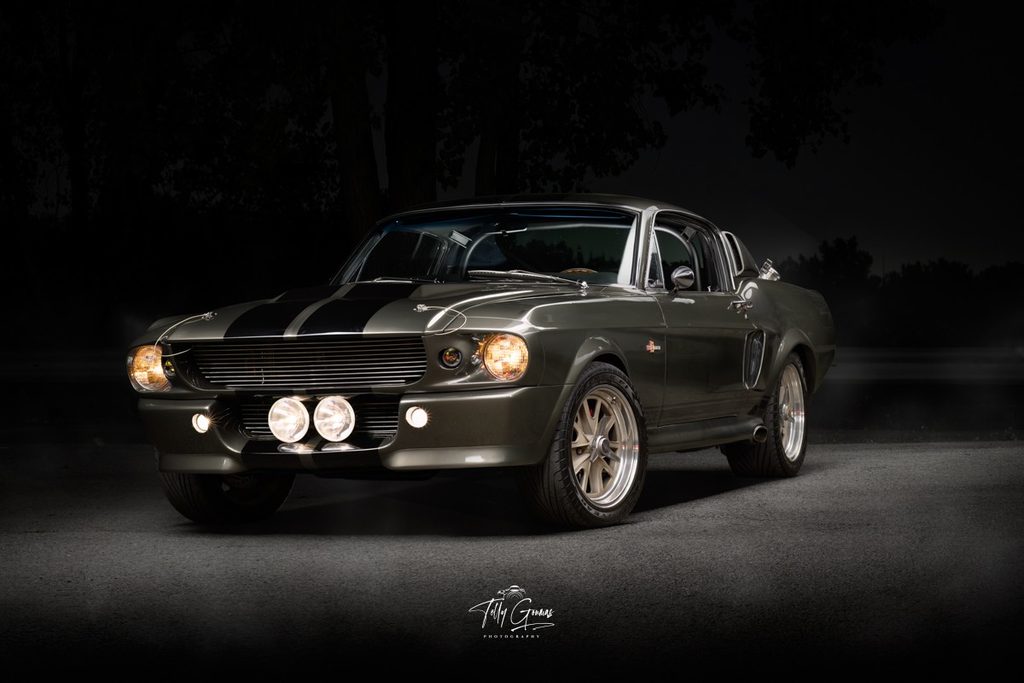
The 1968 Mustang Fastback has one of the most recognizable silhouettes in automotive history.
The long hood, fastback roofline, sculpted rear quarters, and muscular stance create a fantastic subject for automotive photography.
This particular Eleanor-inspired Mustang adds even more visual character with its dark finish, racing stripes, aggressive front end, auxiliary lights, custom wheels, and performance-inspired details.
From the front three-quarter angle, I wanted the headlights and auxiliary driving lights to become an important part of the composition.
The light painted across the hood and front fenders helps define the Mustang’s shape while the darker background keeps attention on the vehicle.
The result is a dramatic automotive portrait rather than simply a documentation photograph.
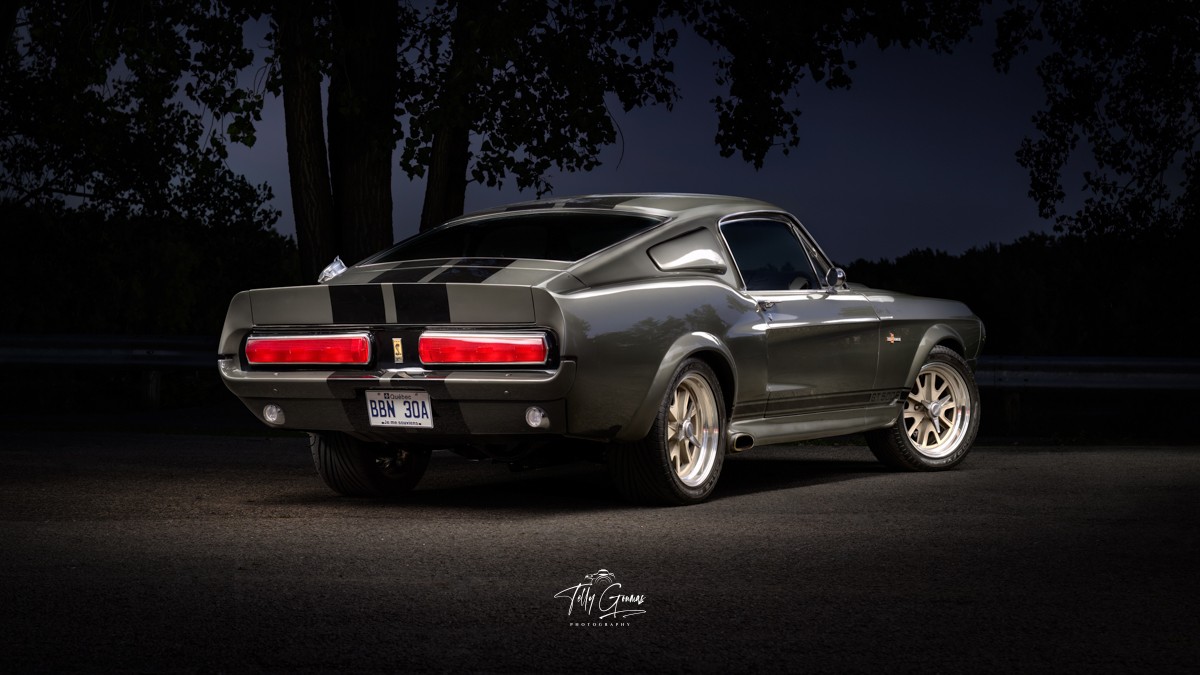
Creating the Rear Three-Quarter Image
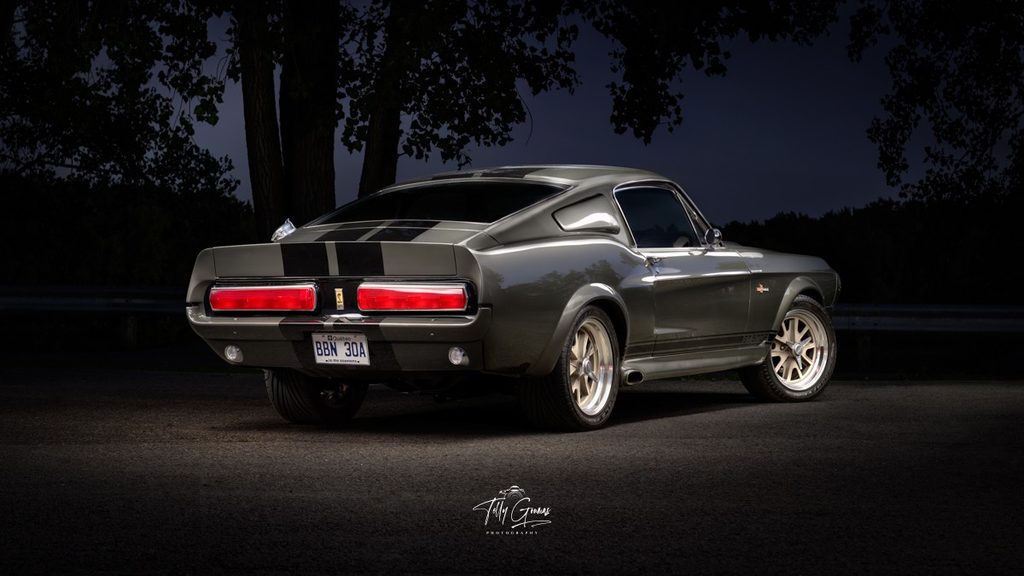
The rear of the Mustang offers an entirely different perspective.
The fastback roofline flows naturally into the rear quarters, creating strong lines that work particularly well with controlled lighting.
For this image, I concentrated the light on the Mustang’s bodywork, wheels, windows, and rear details while allowing much of the surrounding environment to fall into shadow.
This is one of the reasons I enjoy light painting cars.
The lighting isn’t simply something that happens to the car.
It becomes part of the creative process.
I can decide exactly where the viewer’s eye should go and use highlights and shadows to emphasize the vehicle’s design.
The Process Behind Automotive Light Painting
A finished light-painted car photograph can look like a single exposure, but the process is considerably more involved.
The camera stays in exactly the same position while multiple exposures are captured.
During each exposure, I move the light source to illuminate specific areas of the Mustang.
For example, I may create separate exposures for:
- The hood and front fenders
- The grille and headlights
- The wheels and tires
- The roof and windows
- The rear quarter panels
- Chrome and trim details
- The interior
- Small badges and design elements
These exposures can then be combined during post-production to create the final photograph.
The advantage is complete control over the lighting.
Instead of accepting whatever reflections are produced by a conventional lighting setup, I can carefully construct the way the light interacts with the car.
Why I Love Photographing Cars With Light
As an automotive photographer, I’m always looking for ways to show a vehicle beyond simply taking a picture of it.
Every car has its own personality.
A classic Mustang requires a different approach than a modern supercar. A restored muscle car photographs differently from a race car or a heavily modified street build.
Light painting gives me the ability to create a lighting style specifically for the vehicle I’m photographing.
With this 1968 Eleanor Mustang, the goal was to create something dramatic, cinematic, and timeless while still showing the details that make the car special.
Automotive Photographer for Unique Cars
Whether it’s a classic Mustang, muscle car, exotic, supercar, restomod, or one-of-a-kind custom build, professional automotive photography can turn a vehicle into something more than a snapshot.
My approach combines careful composition, controlled lighting, light painting, and detailed post-production to create images designed to showcase the character of each automobile.
If you have a special car that deserves to be photographed, I’d love to hear about it.
Looking for an automotive photographer to photograph your car?
Contact Telly Goumas Photography